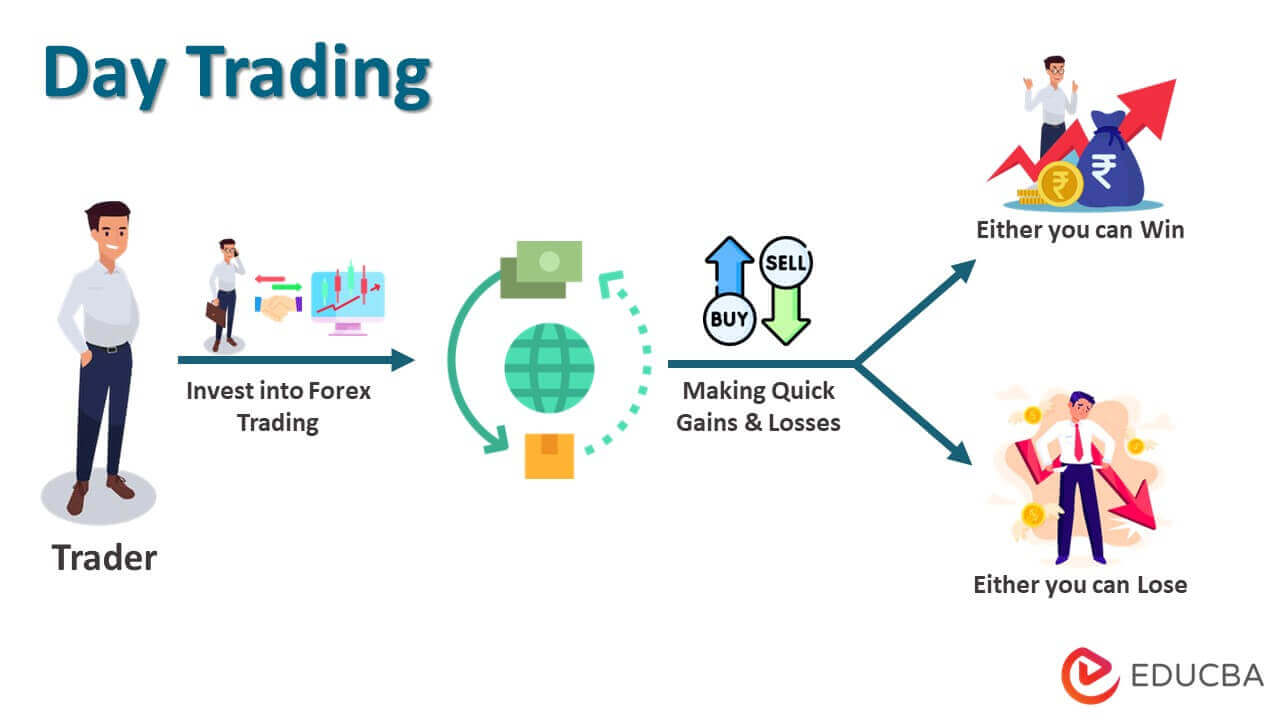
Day trading is a popular short-term trading approach in which traders buy and sell financial assets within the same trading day. Unlike long-term investing, day traders generally do not hold their positions overnight. Their goal is to take advantage of short-term price movements in markets such as stocks, forex, cryptocurrencies, and other financial instruments.
Day trading has become increasingly popular because online trading platforms provide easy access to financial markets and real-time price information. However, day trading is not a guaranteed way to make money. Prices can change quickly, and traders can experience losses if a trade moves against them. Understanding how day trading works, the strategies involved, and the risks is important before getting started.
How Does Day Trading Work?
Day trading focuses on short-term market movements. A trader may purchase an asset when they believe its price could rise and sell it later during the same trading session. Similarly, depending on the market and account rules, traders may use short-selling strategies when they expect prices to decline.
For example, suppose a stock is trading at $100 and a trader believes it could rise to $105 during the day. The trader might enter a position around $100 and close it around $105 if the expected movement occurs. The difference between the entry and exit price, after applicable costs, represents the trading result.
Day traders often use charts and market data to identify potential opportunities. They may examine price patterns, trading volume, support and resistance levels, moving averages, and other technical indicators.
Popular Day Trading Strategies
There are several strategies used by day traders. One common approach is trend trading, where traders attempt to identify the current direction of the market and trade accordingly. If an asset is showing strong upward movement, a trader may look for opportunities to trade in the same direction.
Another approach is breakout trading. A breakout occurs when the price moves beyond an important support or resistance level. Traders may watch these levels for increased price activity and potential short-term opportunities.
Scalping is an even shorter-term strategy. Scalpers may make multiple trades during a trading session, attempting to benefit from small price movements. Because scalping involves frequent transactions, trading costs and execution speed can become particularly important.
Table of Contents
News-based trading is another method. Economic reports, company announcements, interest-rate decisions, and other major events can sometimes create significant price movements. However, trading around major news can also involve increased volatility and risk.
Risks of Day Trading
Day trading involves significant financial risk. Markets can move rapidly, and a trade that initially appears promising can quickly turn into a loss. New traders may also make emotional decisions after experiencing losses, which can lead to poor risk management.
Leverage can increase both potential gains and potential losses. Although leverage allows traders to control larger positions with less capital, it can also cause losses to accumulate quickly.
Risk management is therefore an important part of day trading. Traders may use stop-loss orders to help limit losses and establish a maximum amount they are willing to risk on an individual trade. Avoiding oversized positions can also help reduce the impact of an unsuccessful trade.
Trading costs should also be considered. Spreads, commissions, platform fees, and other charges can reduce trading returns, especially for strategies involving frequent transactions.
How to Start Day Trading as a Beginner
Beginners should focus on education and practice before risking significant amounts of money. Learning basic concepts such as market orders, limit orders, stop-loss orders, technical analysis, and risk management can provide a useful foundation.
A demo trading account can allow beginners to practice strategies using simulated funds. This can help them understand how trading platforms work and how quickly prices can change.
Creating a trading plan is another important step. A plan can define which markets to trade, when to enter and exit positions, how much capital to risk, and what conditions would invalidate a trade idea. Keeping a trading journal can also help identify repeated mistakes and improve discipline.
Day trading should not be viewed as an easy or guaranteed way to generate income. It requires knowledge, discipline, patience, and effective risk management. Anyone considering day trading should understand the possibility of losing money and consider obtaining independent financial advice appropriate to their circumstances.