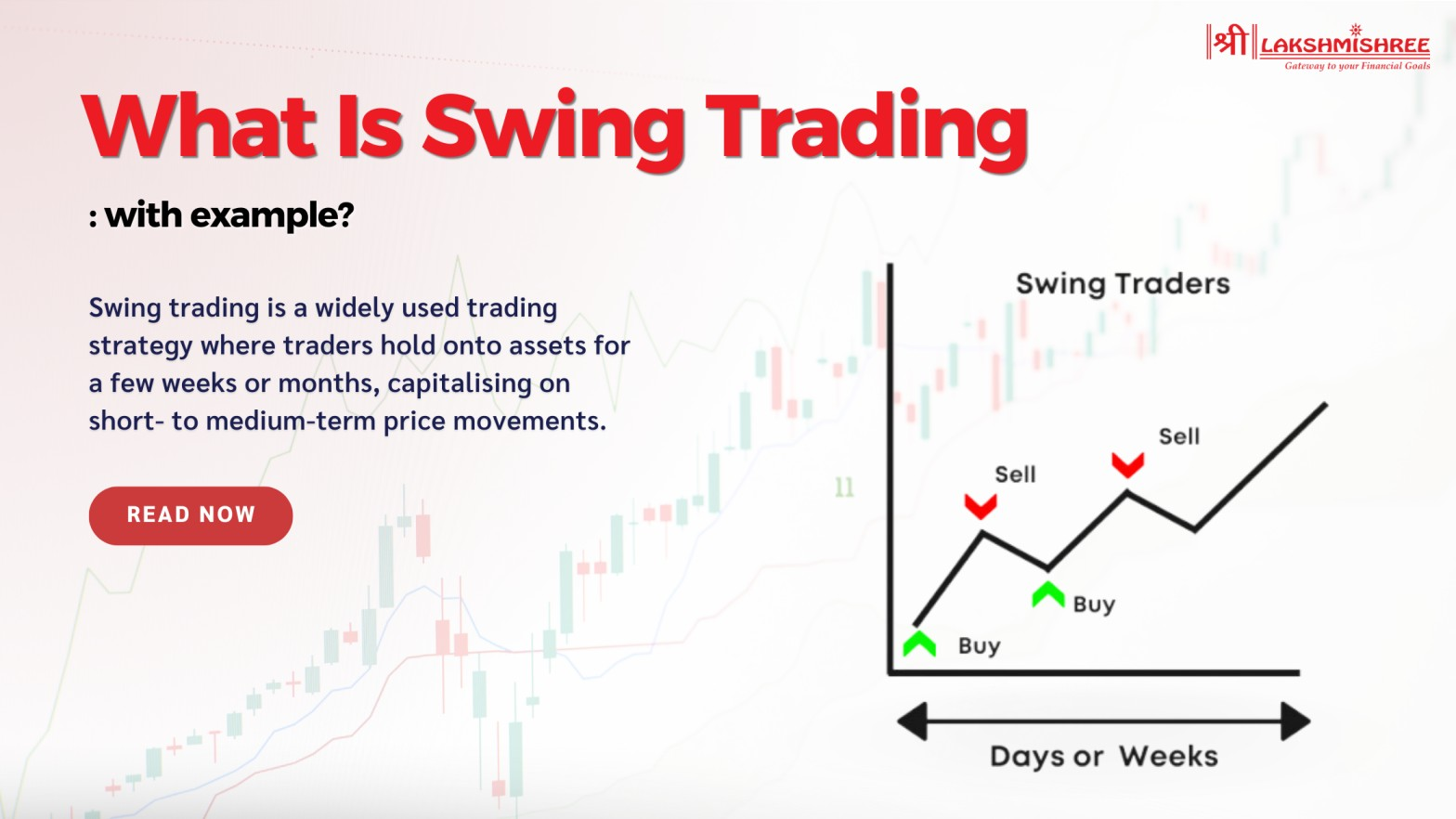
Swing trading is a trading approach that focuses on capturing short- to medium-term price movements in financial markets. Unlike day traders, who usually close their positions before the end of the trading session, swing traders may hold positions for several days or sometimes weeks. The objective is generally to identify potential price swings and enter or exit trades based on a planned strategy.
Swing trading can be used in different markets, including stocks, forex, commodities, and certain other financial instruments. Traders often combine technical analysis with fundamental information to identify potential opportunities. Although swing trading may require less constant monitoring than day trading, it still involves financial risk and does not guarantee profits.
How Does Swing Trading Work?
Swing trading is based on the idea that prices often move through short-term trends or fluctuations rather than moving in a straight line. A swing trader attempts to identify these movements and determine where a potential trade could begin and end.
For example, suppose a stock has been trading between $90 and $100 for several weeks. A trader may study the chart and look for signs that the stock could move toward the upper end of this range. If the trader enters a position and the price moves as expected, they may close the trade after several days.
Technical analysis is commonly used in swing trading. Traders may examine price patterns, support and resistance levels, trendlines, moving averages, trading volume, and other indicators. The exact combination depends on the individual trader’s strategy.
Fundamental factors can also influence swing trades. Company earnings, economic reports, interest-rate decisions, industry developments, and major news events may affect prices during the period a position is held.
Popular Swing Trading Strategies
There are several strategies that traders may use for swing trading. Trend trading is one common approach. A trader attempts to identify an established upward or downward trend and looks for potential entry points that align with that direction.
Another approach is breakout trading. A breakout occurs when the price moves beyond an important support or resistance level. Traders may watch these levels for signs of increased buying or selling activity.
Range trading is another strategy. When an asset repeatedly moves between support and resistance levels, traders may look for opportunities around those areas. However, a range can eventually break, so traders need to consider the possibility of an unexpected price movement.
Some swing traders also use moving averages and momentum indicators to identify potential changes in market direction. These tools can help organize market information, but no indicator can accurately predict every future price movement.
Swing Trading vs Day Trading
Swing trading and day trading are both short-term trading approaches, but they differ mainly in how long positions are held. Day traders generally open and close positions within the same trading day, while swing traders may keep positions open for several days or weeks.
Because swing traders hold positions longer, they may have more exposure to overnight and weekend price movements. Important news released while the market is closed can cause prices to move significantly when trading resumes.
On the other hand, swing trading may require less constant screen time than day trading. A trader can establish entry, exit, and risk-management rules and monitor the position periodically rather than watching every price movement.
The appropriate approach depends on a trader’s goals, available time, experience, risk tolerance, and trading plan. Neither method guarantees successful results.
Risks and Tips for Beginners
Swing trading carries the possibility of losing money. Markets can move against a trader’s position because of unexpected news, economic developments, changes in market sentiment, or other factors.
Risk management is therefore an important part of swing trading. Traders may use stop-loss orders to manage potential losses and avoid putting too much capital into one position. Position sizing can also help control the impact of an unsuccessful trade.
Beginners should spend time learning technical analysis, market fundamentals, order types, and trading psychology before using significant amounts of real money. A demo account can be useful for practicing a strategy without immediately risking actual capital.
Keeping a trading journal is another useful habit. Recording the reason for each trade, entry and exit levels, risk management decisions, and final results can help traders identify patterns in their decision-making.
Swing trading can provide a structured way to participate in financial markets without requiring every position to be closed on the same day. However, it is still a high-risk activity and should not be viewed as a guaranteed source of income. A disciplined approach, realistic expectations, continuous learning, and proper risk management are important for anyone considering swing trading.