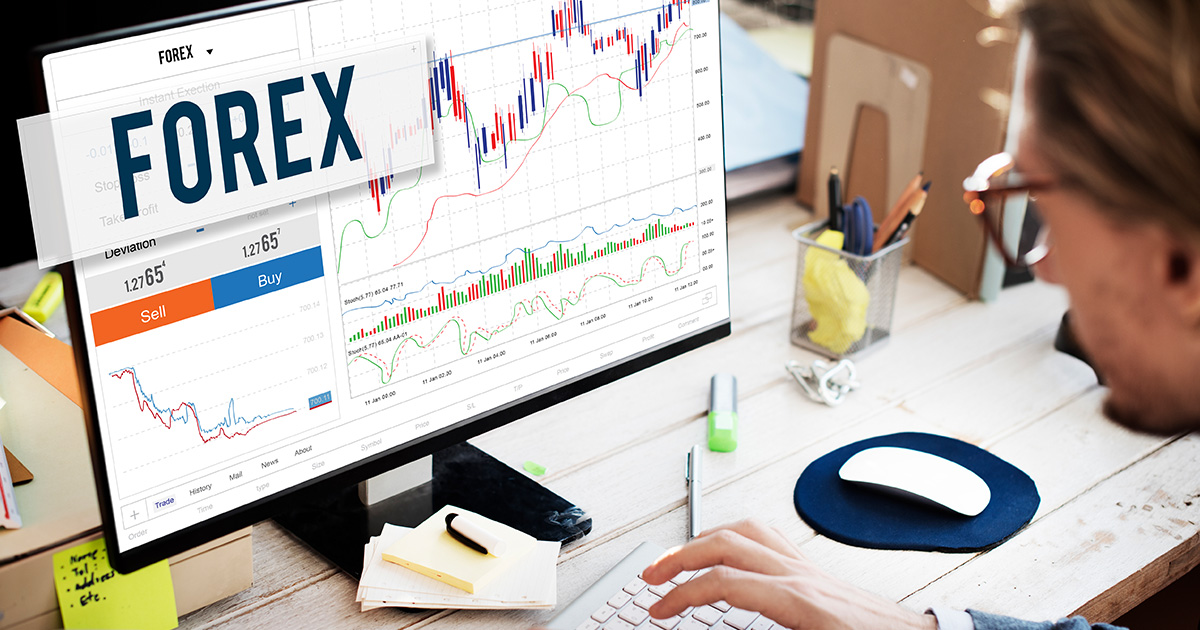
Forex trading, short for foreign exchange trading, is the global marketplace where currencies are bought and sold. It is one of the largest financial markets in the world, with traders, banks, businesses, and financial institutions participating every day. Unlike traditional stock markets, forex trading operates across international markets and is generally available 24 hours a day during the business week.
For beginners, forex trading can look complicated because it involves currency pairs, exchange rates, leverage, spreads, and market movements. However, understanding the basic concepts can make the market easier to follow. Before putting real money into forex, new traders should learn how currency pairs work, understand the risks, and develop a clear trading plan.
What Is Forex Trading and How Does It Work?
Forex trading involves exchanging one currency for another. Currencies are traded in pairs, such as EUR/USD, GBP/USD, USD/JPY, and USD/INR. The first currency is known as the base currency, while the second is called the quote currency.
For example, if EUR/USD is trading at 1.1000, it means one euro is worth 1.10 US dollars. If a trader expects the euro to strengthen against the dollar, they may buy the currency pair. If they expect the euro to weaken, they may sell the pair.
Forex prices are influenced by many factors, including interest rates, inflation, economic growth, employment data, central-bank decisions, geopolitical events, and market sentiment. Because these factors can change quickly, currency prices can move significantly within short periods.
Popular Forex Trading Strategies
There are several approaches traders use when analyzing the forex market. Day trading involves opening and closing positions within the same trading day. The goal is usually to benefit from relatively short-term price movements.
Swing trading focuses on holding positions for several days or sometimes weeks. Traders generally look for larger market movements rather than very small intraday changes.
Another approach is trend trading, where traders attempt to identify whether a currency pair is moving upward or downward and then trade in the direction of that trend. Technical analysis is often used with these strategies. Traders may study price charts, support and resistance levels, moving averages, and other indicators.
Fundamental analysis is another important method. It involves examining economic conditions and news that could affect currency values. Many experienced traders combine technical and fundamental analysis instead of relying on a single indicator.
Forex Trading Risks Beginners Should Understand
Forex trading offers opportunities, but it also carries substantial risk. Currency prices can move unexpectedly, and traders can lose money quickly. One of the most important concepts beginners should understand is leverage.
Leverage allows traders to control a larger position with a smaller amount of capital. While this can increase potential returns, it can also increase losses. A small market movement against a leveraged position may result in a significant loss.
Risk management is therefore essential. Traders may use stop-loss orders to limit potential losses and avoid risking too much of their trading capital on a single position. Maintaining realistic expectations is also important because there is no guaranteed trading strategy or guaranteed profit.
Beginners should also be careful when choosing a forex broker. They should check whether the broker is properly regulated in their jurisdiction, understand its fees and spreads, and review its withdrawal and account policies before depositing money.
How Beginners Can Start Learning Forex Trading
The best starting point for a beginner is education rather than immediately using real money. Learn basic terminology such as currency pairs, pips, spreads, margin, leverage, and stop-loss orders.
A demo trading account can help beginners practice without putting real capital at risk. It allows traders to become familiar with charts, order types, and trading platforms while developing their own approach.
Keeping a trading journal can also be useful. Traders can record why they entered a position, where they placed their stop-loss, what happened afterward, and what they learned from the trade. Over time, this can help identify mistakes and improve discipline.
Forex trading should be treated as a high-risk financial activity rather than a quick way to make money. Successful learning requires patience, risk management, continuous education, and the ability to accept losses. Anyone considering forex trading should understand the risks and consider obtaining independent financial advice appropriate to their circumstances.